India Does Not Need Another Mirror
The next freedom struggle is not against foreign rule. It is against the inherited belief that somebody else must define our worth.

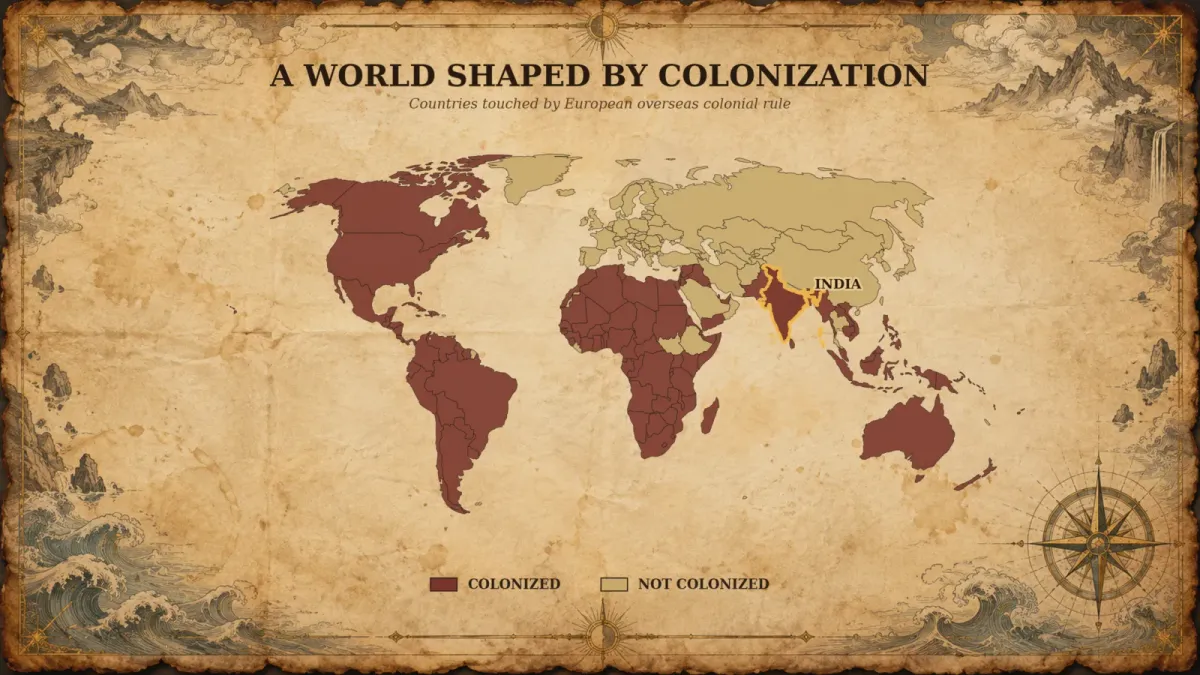
The map uses two categories only: colonized and not colonized. India’s outline follows the official Indian position and includes Pakistan occupied Kashmir, Gilgit Baltistan and Aksai Chin within India.
श्रेयान्स्वधर्मो विगुणः परधर्मात्स्वनुष्ठितात्।
स्वधर्मे निधनं श्रेयः परधर्मो भयावहः॥
— भगवद्गीता ३.३५
Better is one’s own dharma, even imperfectly lived, than the dharma of another performed with perfection. Death in one’s own path is better; the path of another is fraught with fear.
The Civilization That Refuses Simplicity
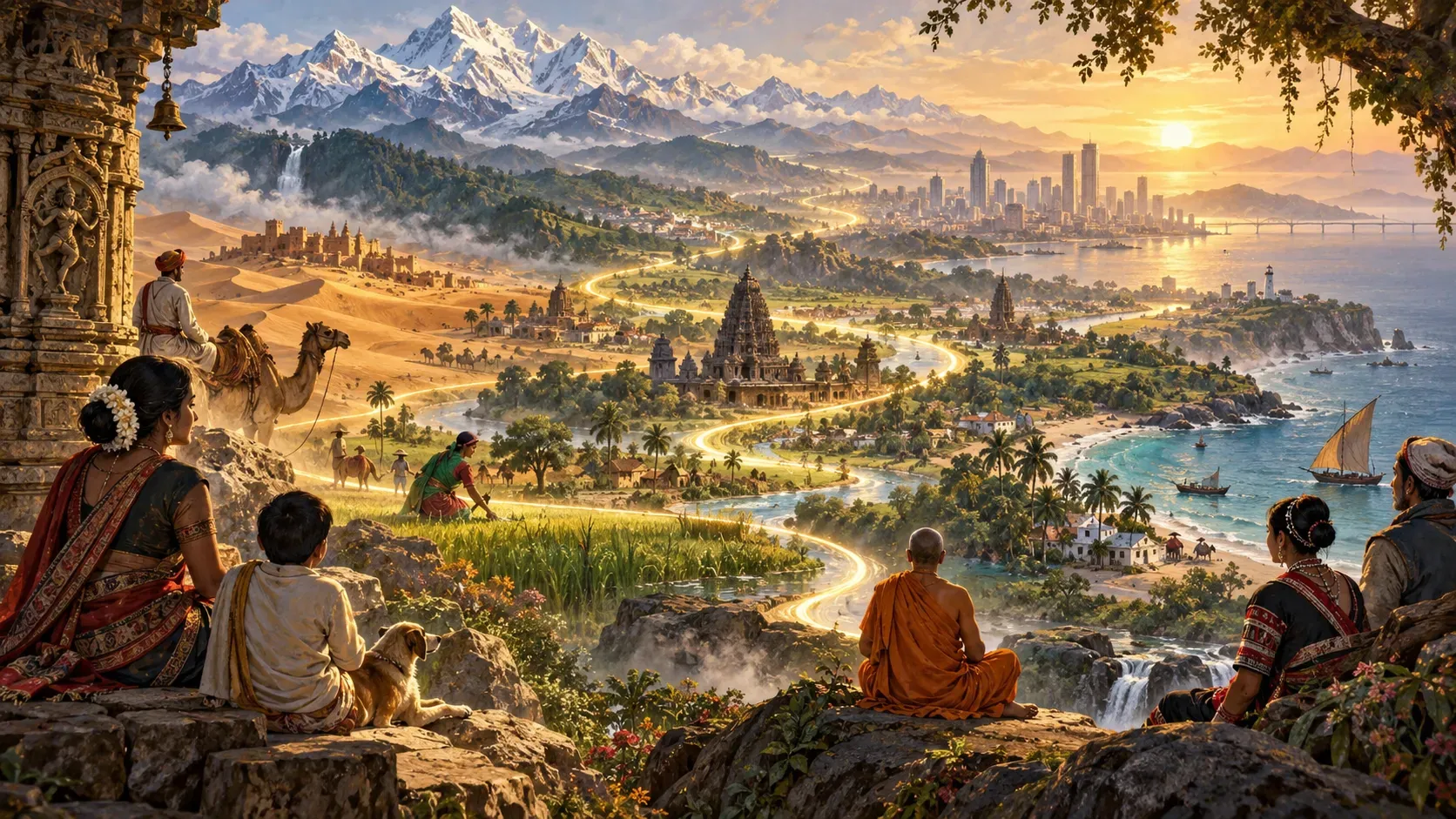
I have travelled through many countries, and travel has a way of revealing what photographs cannot. Some nations feel carefully arranged around a single language, a familiar climate and a broadly shared memory. India refuses such simplicity. Cross one state border and the script changes, the food changes, the rhythm of speech changes, the gods acquire different names and even the monsoon arrives with another temperament. Yet the country remains connected by something older than administration. India is not merely diverse. It is the improbable achievement of unity without sameness.
This is what makes postcolonial India unique. It is not a young country still searching for a personality. It is an ancient civilization trying to remember its own personality after centuries of being told that it had none.
When Conquest Entered the Mind
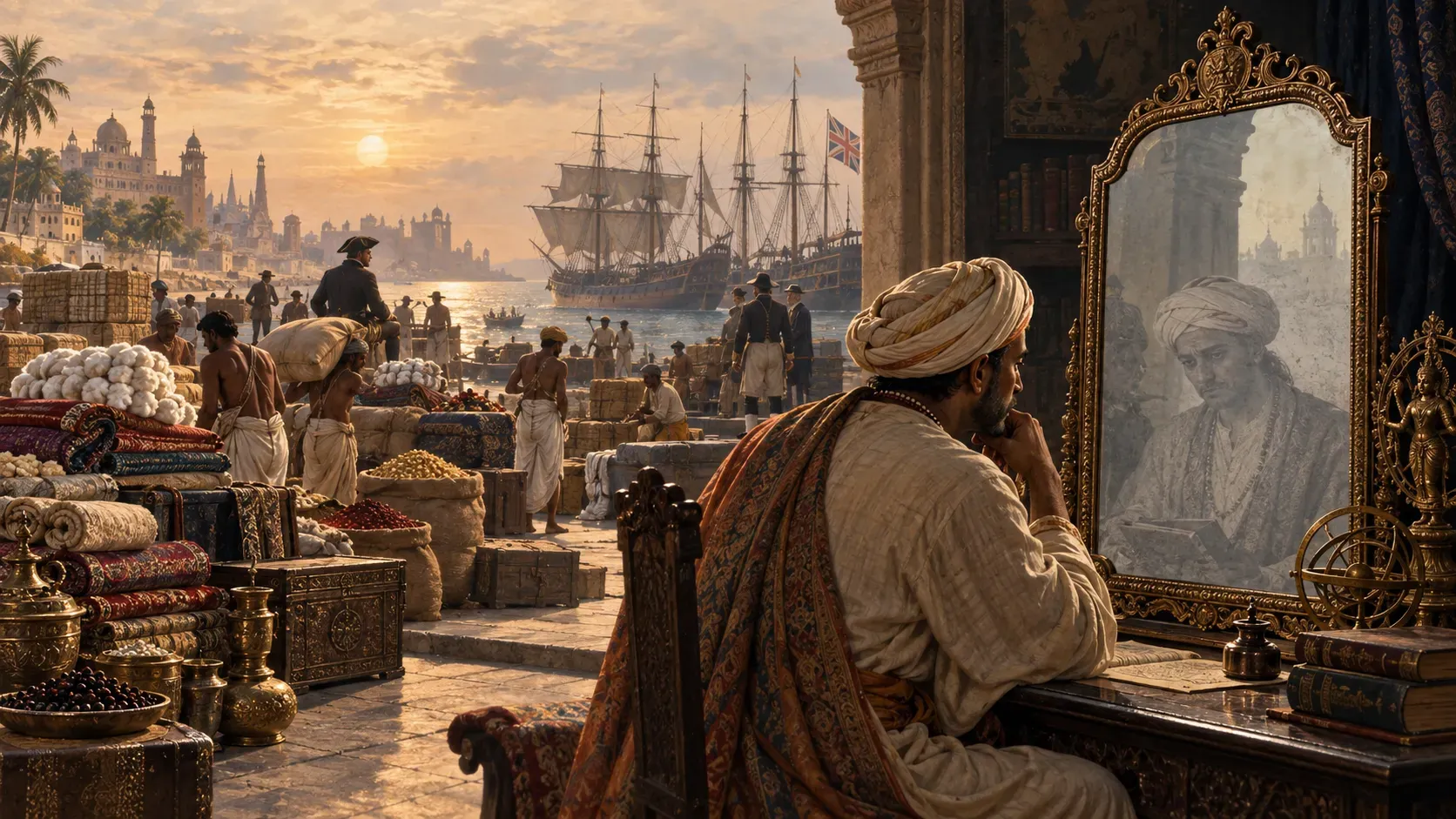
Colonialism did not begin by asking Indians to admire Britain. It first established the power to decide what was valuable. Land, labour, forests, minerals, taxes and trade were reorganized around an empire whose prosperity was elsewhere. India had been a major producer of textiles and manufactured goods. Economic historians estimate that it accounted for roughly a quarter of global industrial output in 1750. By 1900, that share had fallen to about two per cent. Political decline and changing world markets played their part, but British industrial ascent, colonial transfers and policies designed around imperial interests were woven into that collapse.
The deeper damage was psychological. An empire cannot permanently govern a vast population through soldiers alone. It needs the governed to accept the ruler’s scale of value. It must persuade them that foreign clothing is not refinement, foreign manners are not sophistication, foreign history is not universal history and the foreign tongue is not the natural language of intelligence.
The Language Left on the Throne
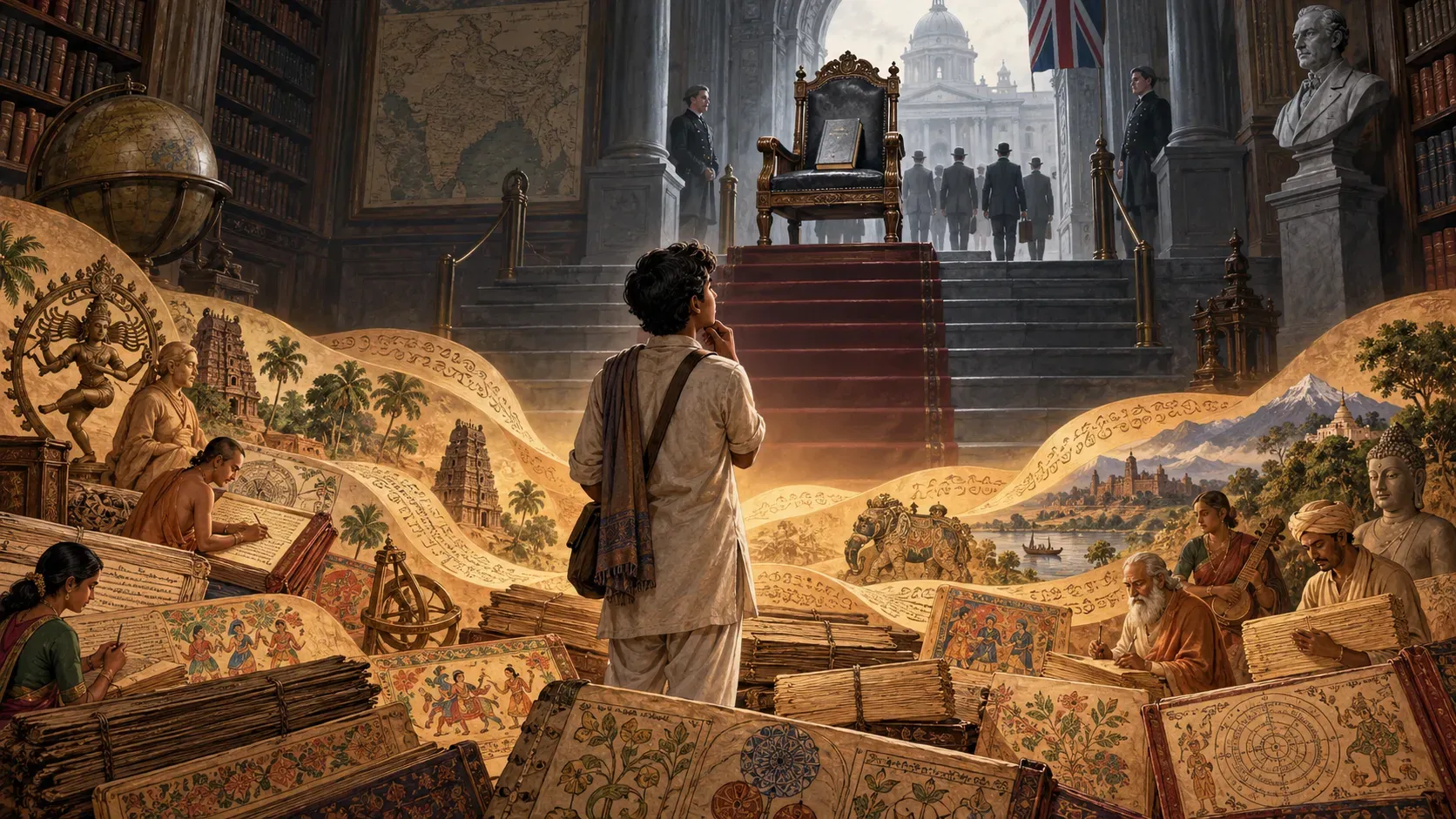
The elevation of English in India was not a neutral cultural exchange. It was a policy of power. In his 1835 Minute on Education, Thomas Macaulay argued for forming an intermediary class of Indians who would stand between the British administration and the millions it governed. English was attached to employment, authority and social mobility, while Indian knowledge was dismissed through a language of contempt. Indians learned English rapidly because people adapt intelligently to the structure placed above them. What began as a requirement for survival gradually became a hierarchy inside Indian society itself.
The ruler eventually departed, but the hierarchy remained. Even today, fluency in English is too often mistaken for intelligence. An accent can open doors that knowledge cannot. Parents who speak beautifully in Marathi, Tamil, Bengali, Kannada, Telugu, Malayalam, Assamese, Punjabi or another Indian language sometimes struggle to teach those languages to their own children, fearing that cultural inheritance might somehow obstruct modern success. A colonial policy could hardly ask for a more enduring victory.
India’s languages are not primitive obstacles waiting to be replaced. They contain some of the world’s oldest literary, philosophical and grammatical traditions. Many Indian scripts maintain a disciplined relationship between sound and symbol. When a language disappears from serious education, science, law or public life, the loss is larger than vocabulary. A way of seeing the world becomes embarrassed into silence.
English may remain useful wherever Indians choose to use it. Utility, however, is not authority. It should be a tool in the Indian hand, never a throne above the Indian mind.
Freedom Came, but the Mirror Remained
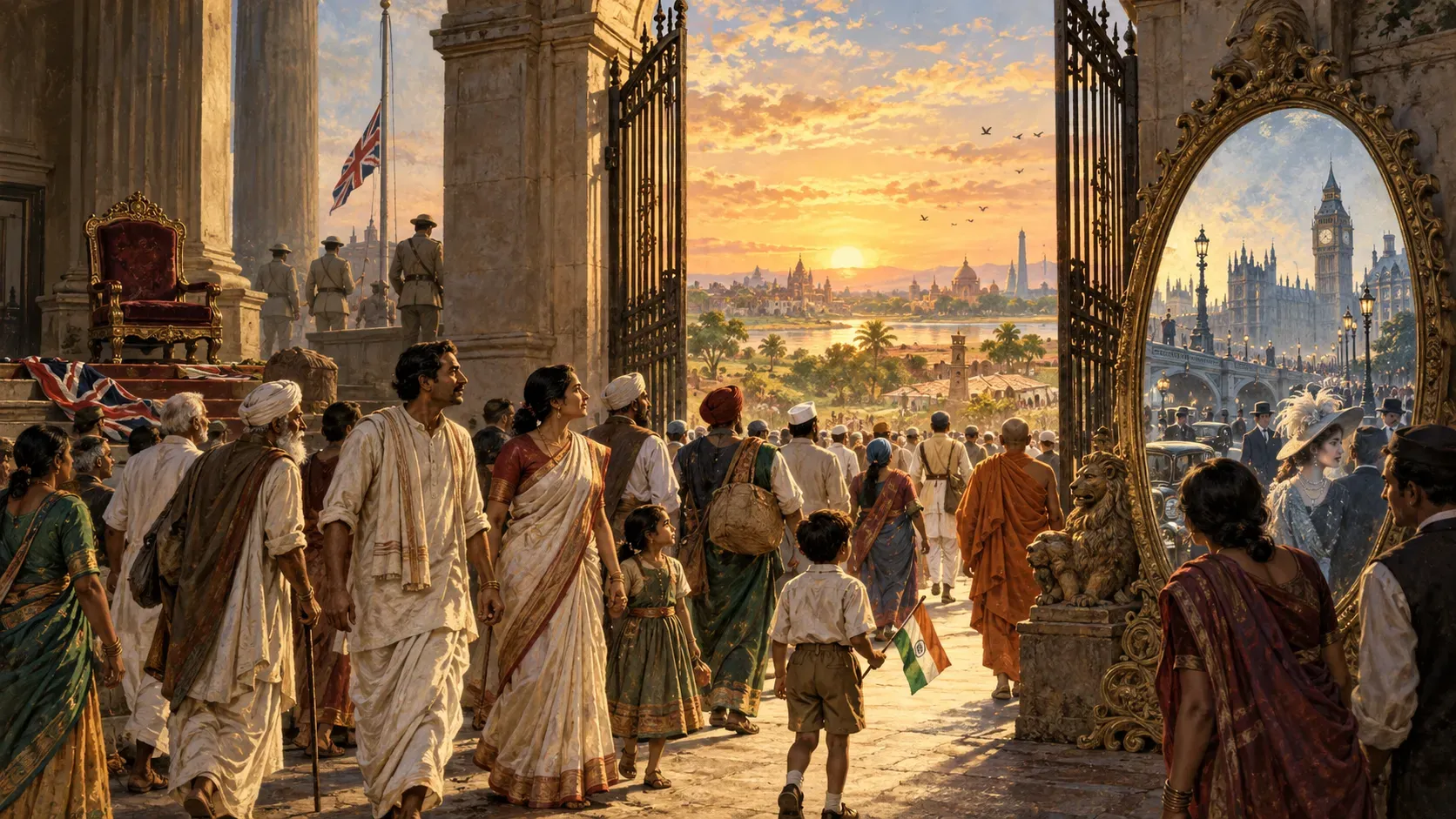
When independence arrived in 1947, the colonizers left behind poverty, partition, weakened native institutions and an educated class trained to interpret India through European categories. Political freedom changed the flag, but it could not instantly remove the longing to resemble the people who had ruled us. The prosperous lifestyles displayed by the empire became images of arrival. Generations chased a foreign picture of success without asking whether it had been partly financed by resources extracted from societies like their own.
Colonialism has since changed its clothes. Empires rarely require governors and armies when contracts, currencies, patents, ratings, trade rules and supply chains can exercise quieter pressure. Powerful nations and corporations naturally write standards around their own geography, capital and strategic interests. Vulnerable countries are then judged by those standards and told that obedience is the price of development. The battlefield moved from territory to economic leverage, technological dependence and control over knowledge.
India Is Not an Unfinished Europe
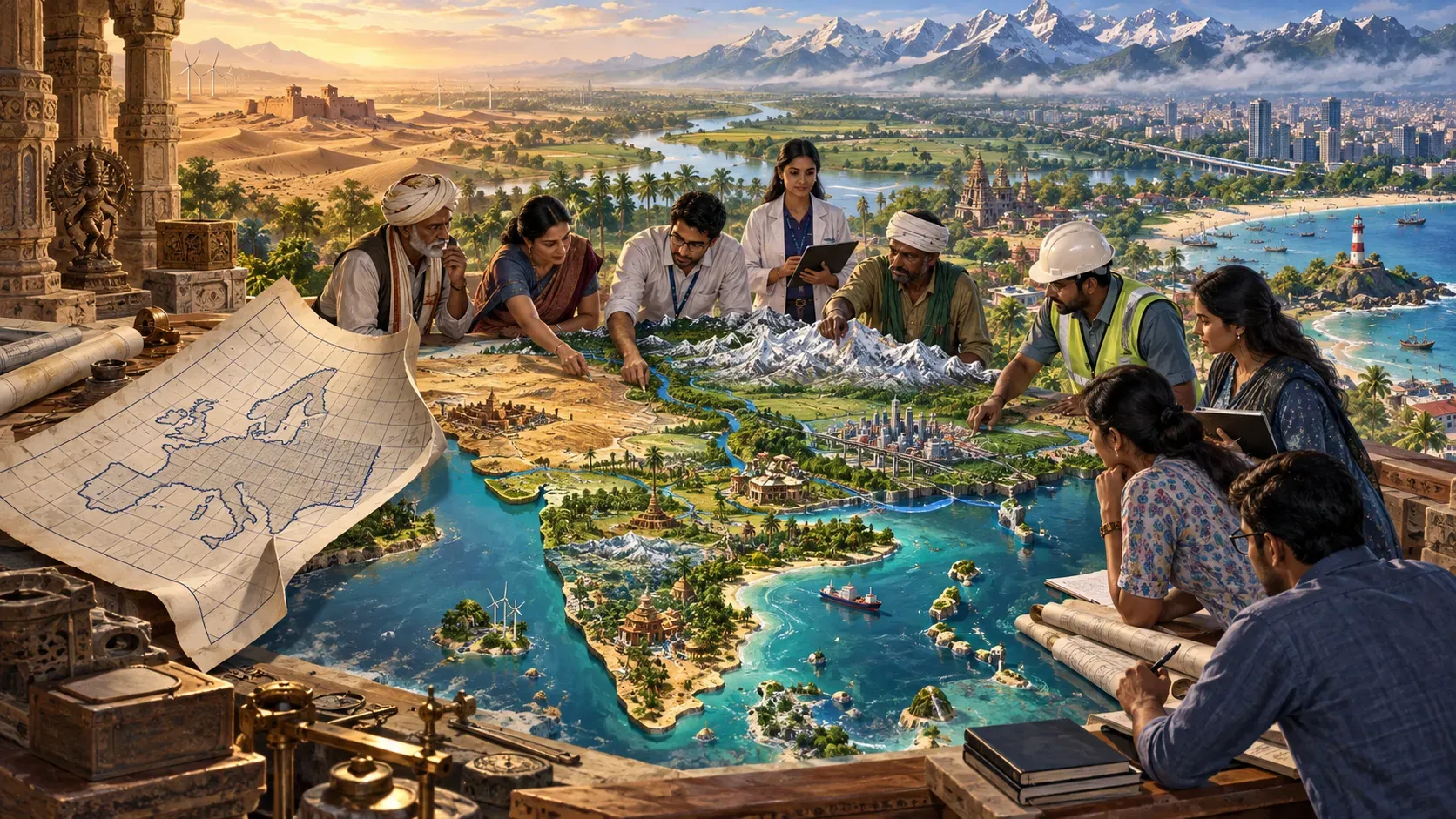
India must participate in the world, but not as an anxious student waiting for approval. Global knowledge should be examined, absorbed and improved, not imitated with reverence. A measurement designed for a compact and relatively uniform country cannot fully describe the challenge of governing a tropical subcontinent of more than a billion people, immense ecological variety and hundreds of living languages. Statistics are instruments, not verdicts upon a civilization.
India is not an underdeveloped version of Europe. It is an underrealized India.
A Billion Possibilities Waiting to Be Seen
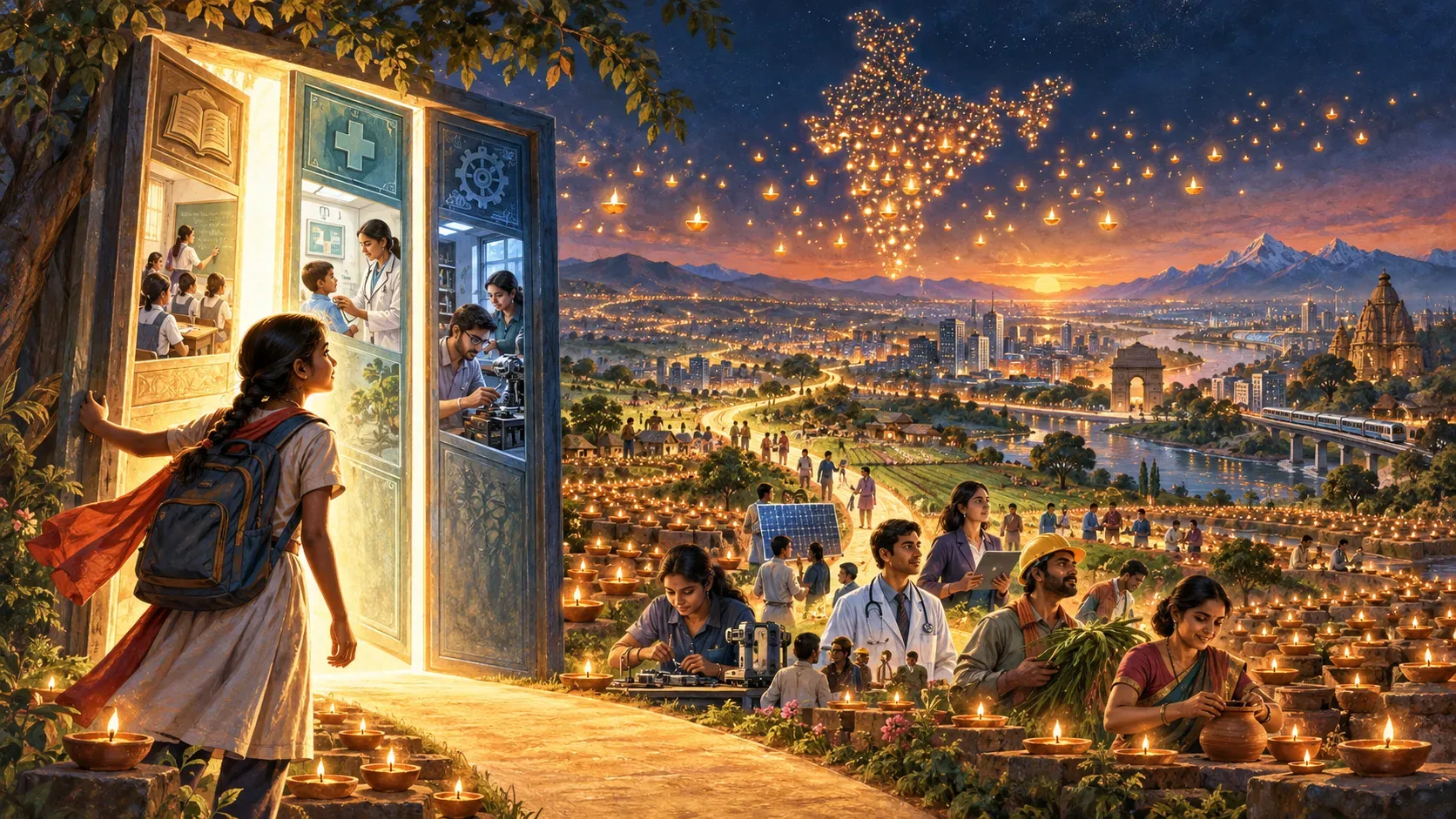
Its vast population is regularly described as a burden, yet the real tragedy is the number of lives that never receive a fair opportunity. A child without nutrition, education, healthcare or access to technology is not proof that India has too many people. It is proof that India has not converted human possibility into national strength. Birth must not decide whose intelligence will be discovered and whose will be wasted.
The same loss appears at the top. India educates engineers, doctors, scientists and entrepreneurs, then watches them strengthen nations already rich in capital and institutions. People cannot be blamed for seeking opportunity. India must instead create the infrastructure, freedom and reward that give its finest talent a compelling reason to build here.
The Country Beyond Our Front Door

National renewal also begins in smaller acts. We keep our homes immaculate, then throw waste beyond the gate. We defend private property, yet treat a road, river, railway station or public wall as though it belongs to nobody. Under foreign rule, the public realm belonged to a distant authority. Independence cannot be complete while that emotional distance survives.
This history is not an excuse for littering, corruption or selfishness. It makes their rejection more urgent. A citizen who abuses a public place damages a piece of his own country. Indore’s transformation shows that behaviour changes when reliable services, consistent enforcement and public participation create collective ownership. What people learn to neglect, they can also learn to protect.
The Freedom Still Before Us
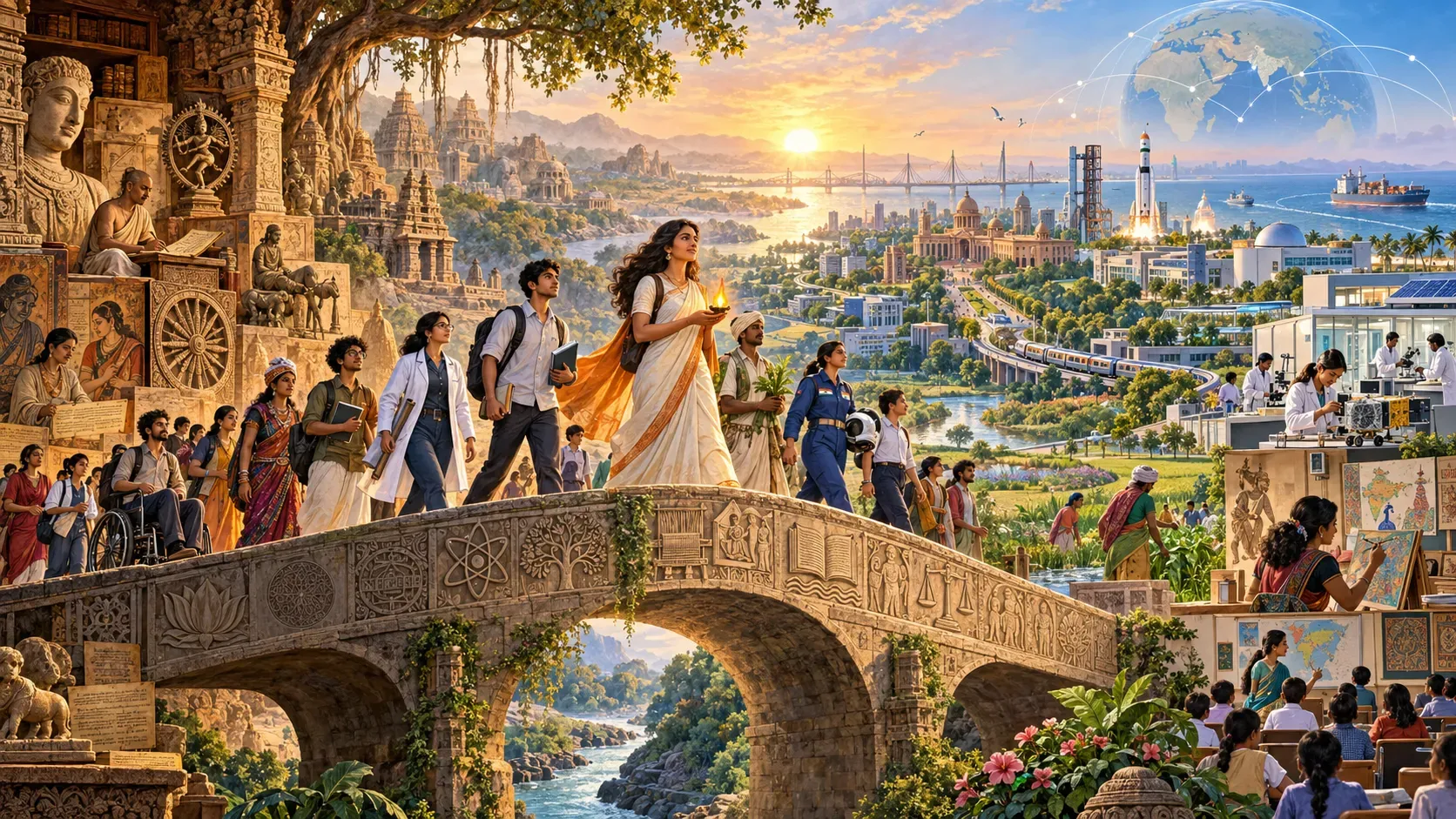
The solution is not theatrical nostalgia. Pride is not the claim that everything ancient was perfect or that every foreign idea is corrupt. Real pride is the confidence to examine our inheritance honestly, preserve what is profound, discard what is unjust and build what the present requires. It means teaching children through languages they understand deeply, restoring Indian history and thought to serious education, producing modern science in Indian languages and ensuring that English fluency is never confused with intellectual worth.
It means designing institutions for Indian realities rather than reproducing foreign models and wondering why they fail at Indian scale. It means developing our own technologies, research traditions, urban systems and measures of progress. It means giving the poorest citizen a fair chance to become more than cheap labour, and giving the most gifted citizen a compelling reason to build a future here.
India does not need to isolate itself from the world. It does not need resentment as a permanent national mood. It needs memory, discernment and self respect. A civilization becomes strong not when it refuses to learn from others, but when it stops believing that learning requires surrender.
The first freedom struggle recovered the land. The next must recover the Indian imagination. India must stop asking how closely it resembles the nations that once ruled it and begin asking what only India, with its scale, memory, intelligence and extraordinary human depth, can become.
The goal is not to prove that India was once great. The goal is to build a nation worthy of that inheritance now.
Sources and references
Bastian Becker, Colonial Dates Dataset 3.0, processed by Our World in Data.